Mirror Mirror on the Wall: The Impact of Virtual Mirror on Self-Compassion Therapy in VR
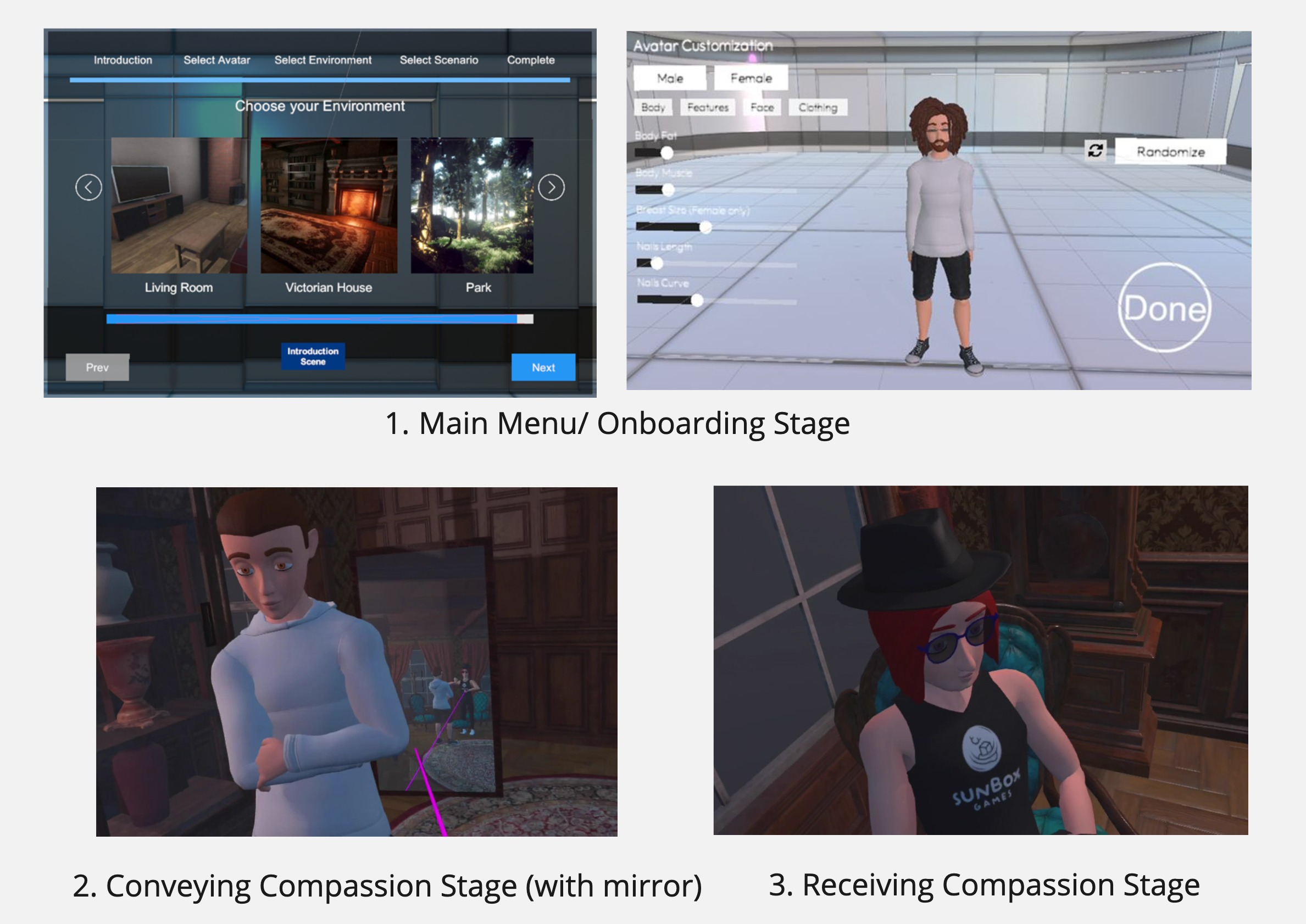
In this study, we explored the potential effects of virtual mirrors in an individualised virtual reality (iVR) self-compassion therapy system using cartoon-like avatars, specifically focusing on therapy effectiveness and user experience (UX). We introduced virtual mirrors into the existing iVR app’s virtual environment using Unity, placing them as "objects in the background" to reflect the conversation scenario when users are expressing compassion. Following this, 38 participants took part in experiments consisting of two iVR therapy sessions with virtual mirrors.
Overall, the virtual mirror appears to be a valuable feature to include. The results show that virtual mirrors bring slight improvements to therapeutic effects and UX compared to no-mirror groups, with nearly all participants providing neutral or positive feedback on its role in the comforting process.
Based on user feedback, we also propose the following design suggestions to improve the mirror feature:
1. Ensure mirrors fit naturally into the scene and are positioned in ways that align with real-world expectations. To maintain immersion, we recommend using natural reflections, such as from a body of water in outdoor environments, to avoid participant rejection.
2. Exclude the user interface (UI) from the mirror reflection to prevent user distraction.
3. Continue omitting the mirror when users are receiving compassion from themselves to avoid overwhelming or confusing them.
Prize Categories

Most Innovative use of XR
Technologies and Skills
- Unity
- Virtual Reality
- Meta Quest 2